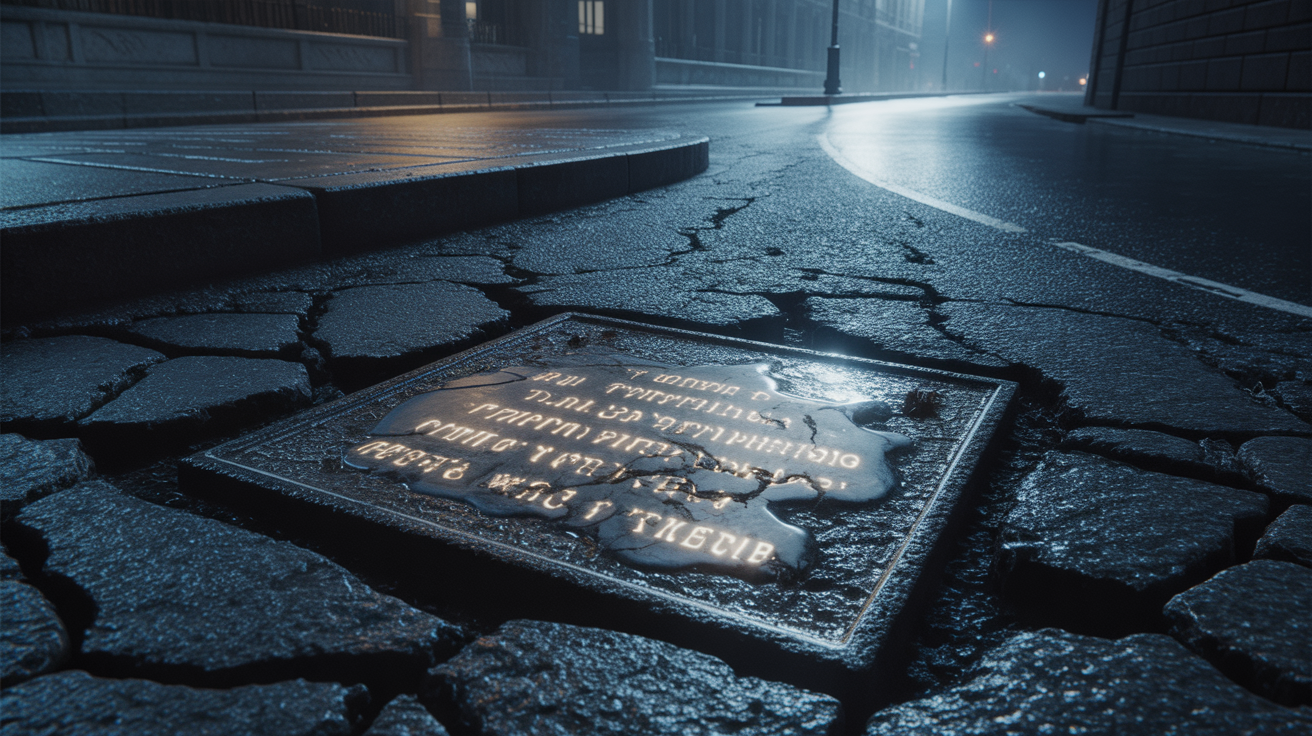
The Toynbee Tiles: Cryptic Messages Embedded in Asphalt
On the bustling streets of Philadelphia, New York, and dozens of other cities across the Americas, a peculiar phenomenon has quietly persisted for over four decades. Embedded in the asphalt, often unnoticed by hurried pedestrians, are small, colorful linoleum tiles bearing a cryptic message: "TOYNBEE IDEA IN MOViE '2001 RESURRECT DEAD ON PLANET JUPITER." These so-called Toynbee Tiles have sparked curiosity, confusion, and a cottage industry of urban legend. Who is behind these tiles, and what is the message they are so determined to share?
The Discovery and Spread of the Toynbee Tiles
The earliest known Toynbee Tile was discovered in Philadelphia in the early 1980s. Over the years, hundreds more have been found, not only in Philadelphia but in cities as far-flung as Boston, Washington D.C., Chicago, Kansas City, and even as far south as Santiago, Chile. The tiles are typically about the size of a license plate, made from layers of linoleum and asphalt crack-filler, and pressed into the pavement so that passing cars embed them permanently into the road surface.
Each tile bears a variation of the same message, referencing the British historian Arnold J. Toynbee, Stanley Kubrick's film "2001: A Space Odyssey," and the concept of resurrecting the dead on Jupiter. Some tiles include additional, often rambling, text—sometimes railing against the media or offering further cryptic instructions. The tiles' appearance is always sudden, with no witnesses to their installation, and their creator has remained anonymous for decades.
Decoding the Message: Toynbee, Kubrick, and Jupiter
The central message of the Toynbee Tiles is as enigmatic as their origin. Arnold J. Toynbee was a respected historian and philosopher, but his works do not directly reference resurrection or Jupiter. The connection to Kubrick's "2001: A Space Odyssey" is equally puzzling; while the film does involve Jupiter and themes of human evolution, it does not explicitly mention resurrection.
Some researchers have pointed to Toynbee's writings on the cyclical nature of civilizations and his musings on the human soul as possible inspiration. Others note that Ray Bradbury's short story "The Toynbee Convector" and a 1980s radio broadcast discussing Toynbee and Kubrick may have influenced the tile-maker. The phrase "resurrect dead on planet Jupiter" remains open to interpretation—perhaps a metaphor for renewal, a literal belief in technological resurrection, or a personal obsession.
Methods and Motives: Theories About the Tile-Maker
For years, the identity of the tile-maker was a complete mystery. The tiles' construction—linoleum cutouts, tar paper, and crack-filler—suggested a methodical, almost ritualistic process. The tiles are typically installed in the dead of night, often at busy intersections, and pressed into the asphalt so that the heat and pressure of traffic embed them over time.
In the early 2000s, amateur investigators and documentarians began to piece together clues. A 2011 documentary, "Resurrect Dead: The Mystery of the Toynbee Tiles," identified a reclusive Philadelphia resident named Severino "Sevy" Verna as the likely creator. Verna, described as intensely private and eccentric, reportedly drove a car with a hole cut in the floor—possibly to drop tiles onto the street without being seen. Despite these revelations, Verna never publicly claimed responsibility, and no definitive proof has ever surfaced.
Motivations remain speculative. Was the tile-maker attempting to spread a philosophical message, warn of a coming apocalypse, or simply create an enduring urban puzzle? The inclusion of anti-media screeds on some tiles suggests a deep distrust of mainstream communication channels, perhaps explaining the choice of such an unconventional medium.
Steven Knight’s Analysis: Fact, Folklore, and Urban Art
From an investigative standpoint, the Toynbee Tiles present a fascinating intersection of urban folklore, outsider art, and cryptic messaging. The physical evidence—the tiles themselves—are tangible, yet their meaning is elusive. Theories abound, but hard facts are scarce. The circumstantial case for Severino Verna is compelling, but the lack of direct confirmation leaves room for doubt.
What stands out is the persistence and scale of the phenomenon. The tiles have appeared in dozens of cities, often in high-traffic areas, over a span of decades. This suggests a level of planning and commitment unusual for a lone individual. The message, repeated with minor variations, hints at a deeply held belief or obsession. Yet, the lack of any attempt to claim credit or explain the message publicly is equally striking.
As a former intelligence analyst, I am struck by the parallels to other forms of clandestine communication—dead drops, coded messages, and the use of public spaces to transmit information. The Toynbee Tiles may not be espionage, but they share the same aura of secrecy and intent.
Enduring Mystery and Open Questions
Despite decades of investigation, the Toynbee Tiles remain an open case. Many original tiles have been destroyed by roadwork, but new ones occasionally appear, suggesting that the phenomenon—or its imitators—persist. The message continues to intrigue, confound, and inspire urban explorers, artists, and conspiracy theorists alike.
Who was the true creator of the Toynbee Tiles, and what did they hope to achieve? Is the message a sincere philosophical statement, a cryptic joke, or something else entirely? And why choose such a labor-intensive, anonymous method to communicate with the world? Until definitive answers emerge, the Toynbee Tiles will remain one of the most enduring and enigmatic mysteries of the modern urban landscape.